
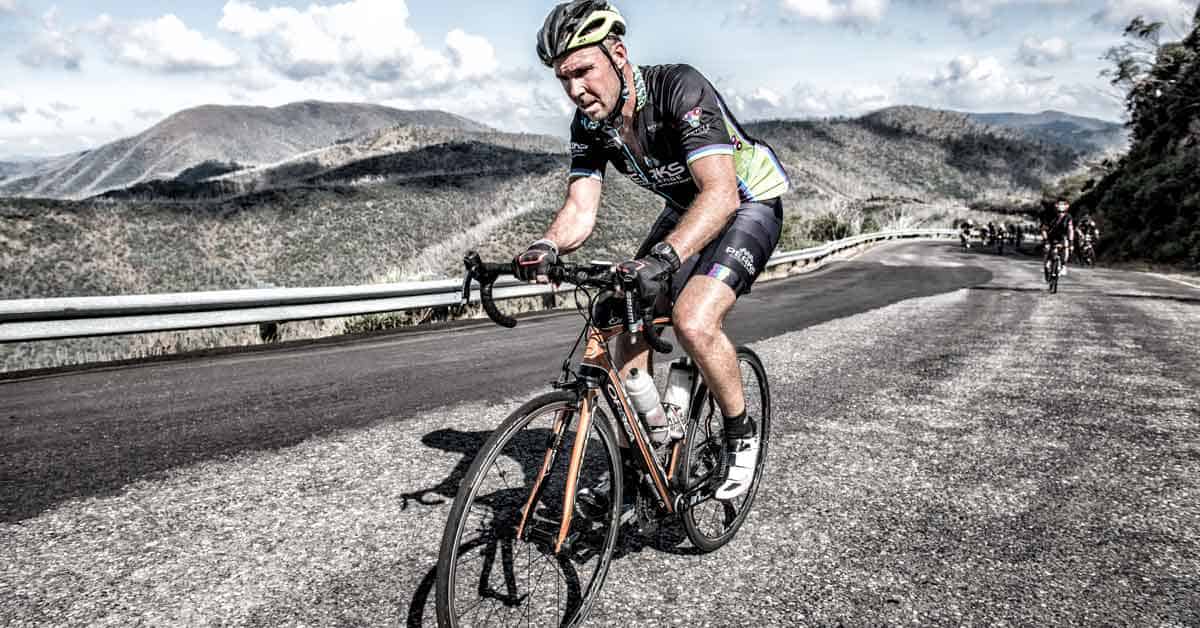
Just as the Achilles tendon is one of the most abused parts of anatomy to the runner the hip flexor group is the cyclists equivalent. Tightness in the Psoas will produce lost power and poor function on the bike.
This video has been kindly provided by Julie from PosturePro and explains the interaction of the Psoas muscle
The Psoas (hip flexor) and Cycling
Much of the abuse is caused by the constant generation of force in the flexed position while riding combined with a lifetime of long hours of daily sitting.
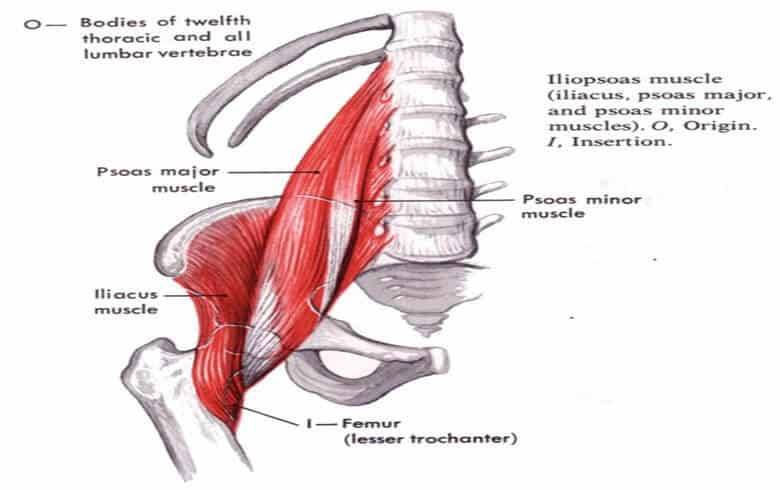
The Iliopsoas attaches to the lower part of the spine and femur forming part of the major hip flexor group. Tightness in the muscle contributes to the gradual reduction in power on the bike, lower back pain, general weakness in the hip region, rotation of the hip, poor knee tracking, poor posture, poor flexibility in the hip and hamstrings, and inability to get good positioning on the bike. All in all, bad news for cyclists.
The great news is that under the guidance of a qualified professional they can, in some cases, release the years of abuse. The bad news is that there are very few physiotherapists around that I have found are able to successfully release the Psoas and provide good advice on maintaining it.
Releasing the Iliopsoas is a fairly painless process that involves deep tissue work. But, not deep tissue work that is so painful that you need to be scraped off the ceiling. In fact, I find that if most deep tissue work is done at too high an intensity the muscles won’t release due to the whole region locking up in an effort to protect itself.
DISCLAIMER – This article is not intended as medical advice. Please seek professional medical advice from qualified practitioners to access your individual condition and have them made a recommendation as to the best treatment options available to you.
Here are some Physiotherapists that I recommend in Melbourne & Adelaide in Australia:
Lucas Owen
www.cyclingphysiotherapycentre.com.au
Cycling Physiotherapy Centre
52 Templestowe Road
Bulleen, VIC, 3105
(03) 9852 1618
Julie Williams
www.posturepro.com.au
PosturePro
Suite 8, 132 Muller Road
Greenacres, SA, 5086
Ph 08 8261 0177
Image sourced from http://www.itp.nyu.edu/~mm4839/Images_Blog/Bridge_singingvoicepsoas.jpg
Video provided by Julie at PosturePro
Leave A Comment